

A warm welcome is always waiting for you and your child in our Early Years Foundation Stage classroom.
Our experienced teachers ensure that the children get the best possible start to their educational journey, cultivating a love for learning that will last a lifetime.
The purpose build foundation stage unit provides the best provision to facilitate for a child’s development at the start of their educational career. The unit is resourced to cover all areas of development during play-based activities. From physical, social and emotional growth to cognitive and language development, we believe in a learning rich environment which lays solid foundations for success from the very beginning. Children have access to full outdoor provision directly from our classroom and also regularly take part in a range of learning activities in our naturally resourced woodland
Reception
A balance of play and learning for reception pupils is suitably met in our classroom. Stimulating and carefully planned early years provision is available for child-initiated activities alongside a partitioned classroom where the more formal aspects of reception learning are delivered. These lessons commence at the beginning of the year with short inputs, increasing periods of time throughout the year fully preparing children for year one.
The Early Years Curriculum
The classroom is organised with a holistic approach, enabling children’s learning and development to advance in all areas of the early year’s curriculum. Areas of ‘continuous provision’, are regularly enhanced every week to link with our topic.
During their time in nursery and reception they will be learning skills, gaining new knowledge and demonstrating their understanding through 7 areas of learning and development.
The prime areas of learning are fundamental to enable a child to grow and learn successfully. These are:
Communication and Language
‘The number and quality of the conversations children have with adults and peers throughout the day in a language-rich environment is crucial.’ Statutory Framework for the Early Years Foundation Stage 2023
Take a look at our progression map for communication and language development. Here you will see the typical learning expectations for nursery and reception pupils in this area of development and the linked vocabulary.
Physical Development
'Gross motor control provides the foundation for developing healthy bodies and social and emotional well-being. Fine motor control and precision helps with hand-eye co-ordination, which is later linked to early literacy’. Statutory Framework for the Early Years Foundation Stage 2023
Personal, Social and Emotional Development
‘Children’s personal, social and emotional development (PSED) is crucial for children to lead healthy and happy lives.’ Statutory Framework for the EYFS 2023
Building on the prime areas of a child’s development will help them to gain skills and knowledge in 4 specific areas. These are:
Literacy
‘It is crucial for children to develop a life-long love of reading.’ Statutory Framework for the EYFS 2023
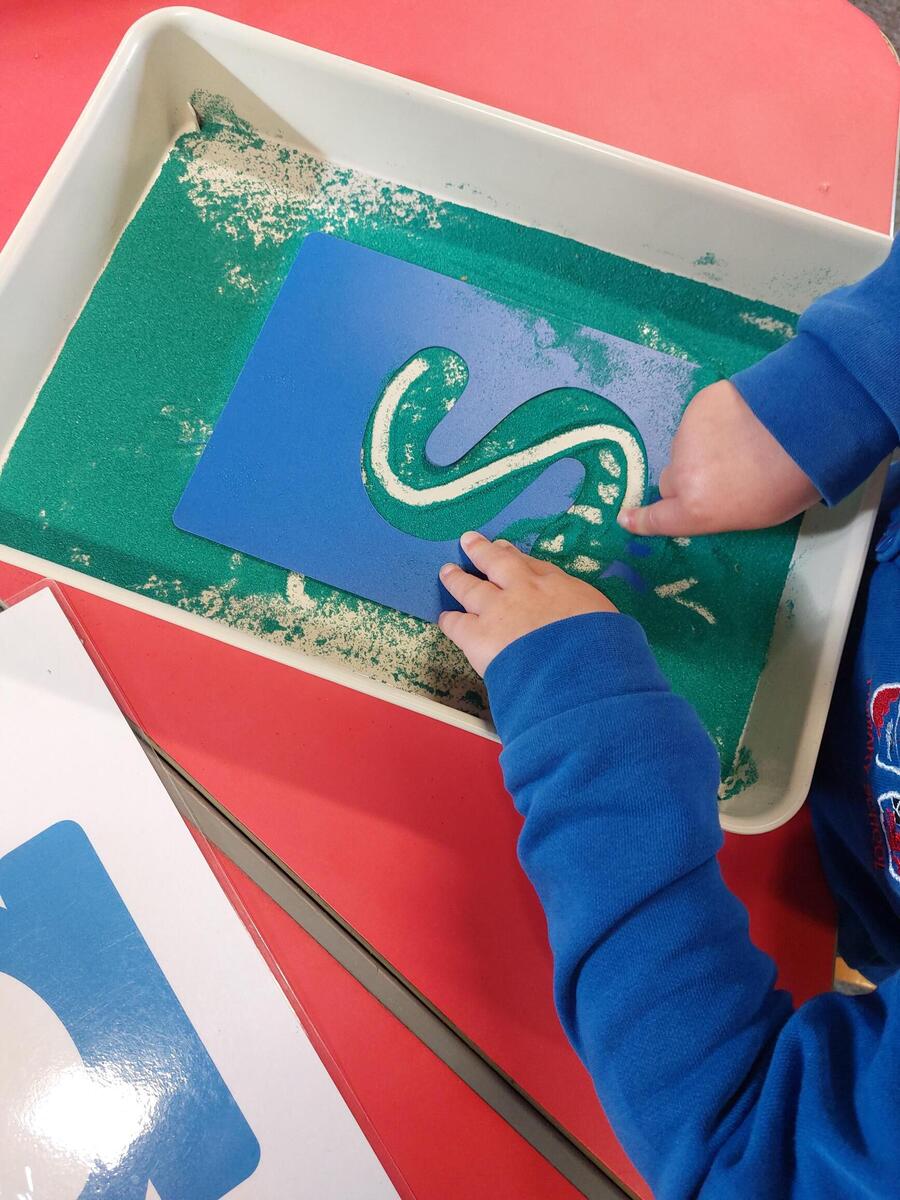
Reading and writing skills are learnt through daily phonics sessions. Our nursery pupils take part in Phase One phonics lessons, which create a firm foundation to build on during a child’s reception year. These skills are acquired through fun activities centred around listening to, and creating sounds.
Our reception pupils follow the Rocket Phonics Programme. This programme has been designed to encapsulate the exact principles needed for building a sound footing for literacy success and continue into Key Stage One.

Mathematics
‘Developing a strong grounding in number is essential so that all children develop the necessary building blocks to excel mathematically’. Statutory Framework for EYFS 2023
Understanding the World
‘Understanding the world involves guiding children to make sense of their physical world and their community’. Statutory Framework for the EYFS 2023
Expressive Arts and Design
‘The development of children’s artistic and cultural awareness supports their imagination and creativity’. Statutory Framework for the EYFS 2023
The Importance of Oracy in Our EYFS Classroom
In our Early Years classroom, we believe that spoken language (oracy) is the foundation for every child’s learning and development. Before children can read or write, they learn through listening, talking, exploring ideas, and engaging with others. Strong oracy skills help children build confidence, develop friendships, solve problems, and express their thoughts and feelings.
To support this, we use the SHREC approach, a simple but powerful way of boosting children’s communication and language every day:
-
S – Share Attention
We focus closely on what your child is interested in, following their lead and joining in their play. -
H – Hold Conversations
We take turns talking with children, encouraging meaningful back‑and‑forth interactions. -
R – Respond
We respond warmly to children’s words, gestures, and ideas to keep conversations flowing. -
E – Expand Language
We gently build on what children say, introducing new vocabulary and richer sentences. -
C – Curiosity Questions
We ask open‑ended questions that spark thinking and invite children to express themselves.
This approach ensures that a large part of each child’s learning happens through high‑quality talk, whether during play, story time, outdoor exploration, or everyday routines. By creating a language‑rich environment, we help children grow into confident communicators who are ready for future learning.
..


Take a quick tour of our classroom here
Nursery
Our nursery children play and learn alongside their older reception peers. This organisation of classes has been very successful and provides our 3-year-old children the opportunity to learn from their reception peers, who regularly adopt a mentoring role, a valuable experience for all.
Transition from nursery into reception is extremely smooth as expectations and routines are already embedded. The staff thoroughly understand every child's individual needs in readiness for them to receive more formal learning in subjects such as phonics and mathematics during reception.
Our nursery is open Monday to Friday lunchtime and we accept childcare funding. Children can join our nursery upon reaching their 3rd birthday. We can offer a cooked lunch or sandwich if required from the school menu.
If you are interested in your child attending our nursery we would welcome you to pay us a visit. Take a look around the unit as well as the rest of the school.
You could also attend one of our Stay and Play sessions where your child would have an opportunity to play with our pupils. You could have a chat with other parents to learn more about our school community. Just contact our school office to find out more details and arrange a time.
Nursery Fees:
The nursery is open Monday to Friday during term time.
Morning and afternoon sessions are 3 hours each (morning 9am to 12pm, afternoon 12.30pm to 3.30pm). On Fridays nursery provision closes at 1pm. Children can also stay over lunchtime (Monday to Friday) for an additional cost.
Please contact our school admin team for current charges. admin@boyle-petyt.n-yorks.sch.uk